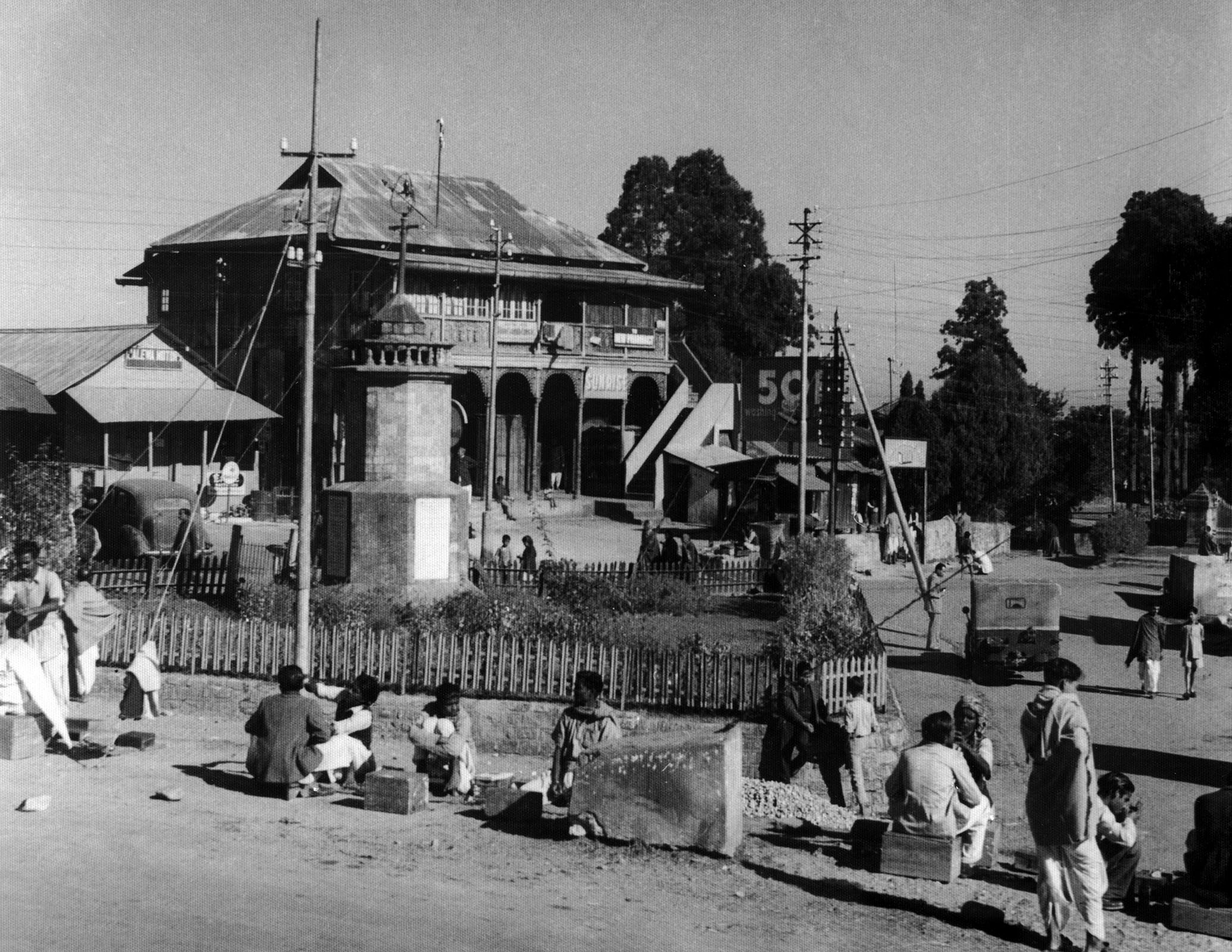
The streets of Shillong are fraught with arguments… A Bihari filmmaker married to a Khasi finds himself using the phrase as the title of his new documentary to start discussions on the much-debated topic, the existential crisis of the hill tribe. * Are the men of the Indian plains stealing Khasi women’s affections? * Will the influx of outsiders and mixed marriages prove apocalyptic for the indigenous people? * Is matrilineality a curse in disguise? 'La Mana / Not Allowed' explores the marginal multicultural dreams of Khasi Shillong
Why do songs die? Can they be revived? In Syndai village in War Jaintia, women remember a song called Long Hai, supposedly a weeding song. Long Hai has not been sung for at least 65 years in the village.
Khasi is one of the indigenous communities in Bangladesh. The community has been living in Sylhet region. The main occupation of the Khasi indigenous people of this district is cultivation of betel-leaf in the small hilly lands. They search for lands and plan to farms diverse crops but landless situation has not allowed them space to do that rather their problems are getting intensified due to the skyrocketing of the daily commodities.
Khasi Women Wisdom who number about 1 million in India's north-eastern state of Meghalaya, carry on the matrilineal tradition. The youngest daughter inherits, children take their mother's surname, and once married, men live in their mother-in-law's home. These stories from Khasi women give insight and weave the tapestry of this unique social framework and matrilineal society that has influenced culture and arts and that in turn contributes to the larger universal discussion of gender equality.
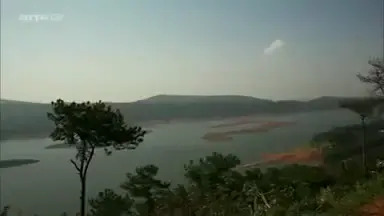
Der indische Bundesstaat Meghalya liegt nördlich von Bangladesch und südlich von Assam in den Vorläufern des Himalaya. Meghalaya heißt übersetzt: Wo die Wolken wohnen. In dieser Region hat sich beim Volksstamm der Khasi die matrilineare Gesellschaftsform erhalten, das heißt, die Erbfolge richtet sich immer nach der weiblichen Linie. Im Bundesstaat Meghalaya ist das sogar in der Verfassung verankert. Obwohl die meisten Khasis während der Kolonialisierung der Engländer zum Christentum übergetreten sind, halten sie an ihrer traditionellen Lebensweise fest.
Thayang area of Ri Bhoi district in the north Khasi hills where the practice of rice cultivation done by groups of both men and women makes it necessary for a singer, armed with a small drum to accompany them in their work by singing the Krud Ksing songs.
Manipur, which became a state of India in 1972, abounds in natural beauty in the north-eastern region. As mythology goes,God Nongpokingthou and Goddess Panthoibi created Manipur in their cosmic dance for the happiness of ancient tribes. This film has a panoramic view of life, culture of Manipur and various developments that have taken place since 1972.
This documaentary is an attempt to showcase the lives of those people whom the world knows as destitutes. It is true that their families have betrayed them but they did manage to make one what they call family a home. Therefore, the documentary is not meant to arouse a sence of pity among its viewers but would appreciate if their attitude towards life may be an inspiration for those in despair to give life a second chance to give life a better chance.
Aerial shots of the mountainous area at the Burma - Assam border with motor transport moving along road. Various shots of General Grant tanks and Indian infantry of 5th and 7th Indian divisions advancing along roads. The tanks put up barrage to flush out Japanese stronghold. Various shots of Indian artillery in action and smoke pours from hillside. Various shots of burning wooden huts of Japanese held village. Various shots of Indian soldiers advancing through wooded area past the bodies of dead Japanese soldiers.
The Film explores the underground Japanese Anime subculture in Nagaland against the backdrop of other popular foreign subcultures and what makes it so popular with the youth.
"1. CHARAN SINGH THE 5TH PRIME MINISTER: New Delhi, 26th July. President Sanjiva Reddy invites Mr Charan Singh, leader of the Janata Party (Secular) to form an alternative Government. Eight cabinet ministers are sworn in. Mr Charan Singh taking oath in Hindi. Janata Party (Secular) President Raj Narain addresses a public rally at Ram Leela Ground. 2.FLOODS IN RAJASTHAN: For the first time in 30 years the largely desert districts of Pali, Jodhpur, Barmer, Jalore and Nagour under floods. Army jawans engaged in rescue operations. 3. INDUSTRIAL NEWS: COAL BASED FERTILISER PROJECTS - Built built near the pit-heads at Ramagundam in Andhra Pradesh. Another one at Talcher. 4. REGIONAL NEWS (EAST): (a) SHIFTING OF JHUM CULTIVATION: In Burnihat Meghalaya, the Indian Council of Agricultural Research has launched a projec to develop an alternative system of farming on slopes and terraces against jhum cultivation. (b) RATH YATRA - CAR FESTIVAL: Badipadha, Orissa. (c) CHILDREN'S PARK: At Patna, Bihar. (d) DIEH DIEN KHLAM FESTIVAL: Jowai town of Meghalaya, the Jaintias celebrate their popular annual festival. All the outdoor celebrations are for men only"
A writer Banlam Syiem lives a henpecked life with his wife, Ridashisha Kharsyntiew. He is given a task to complete a story for a magazine column with a considerably tight deadline when his day is interrupted by a shocking turn of events.
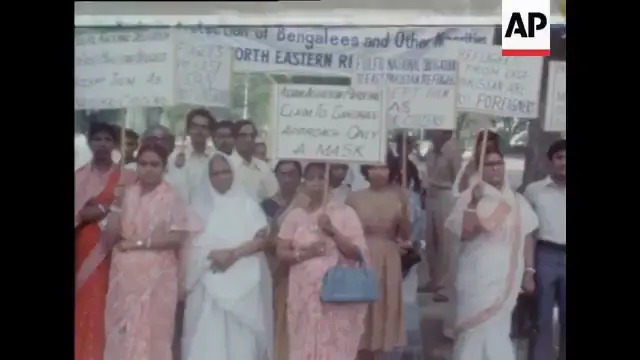
(2 Jun 1980) Indian Prime Minister Inidira Gandhi and her Cabinet meet with the opposition leaders in New Delhi to discuss the crisis with refugees in Assam as people protest against immigrants.
India's Independence Day in 1947 - A mass gathering at the Red Fort in Delhi, India. Shots of gunfire salute beside an ancient wall. Prime Minister Jawaharlal Nehru raises the Flag of India. Jama Masjid, India's largest Mosque, can be seen in the distance.
Indians fighting in World War Two. Far East. Sea warfare, ships fire depth charges. Indian troops or airmen training. Flying for the RIAF Royal Indian Air force. Burma - Flying over Burma. Aerial views of Burma. Monsoon in Burma. Scenes of warfare.
Tea Production in India in the 1920's. Tea plantation. Colonial India. Ground is prepared by large number of Indians who use mattocks to ready the soil. Tea seeds are tested by being floated in water. Seeds are planted in holes made by a stick and pulverised earth placed on the seed in the hole. Large number of agricultural workers.
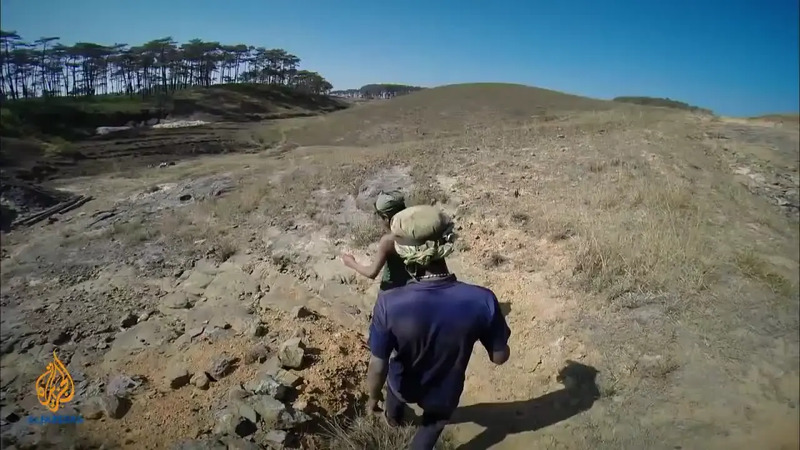
Karma,16, has worked as a miner for over a year in India's northeastern state of Meghalaya, crawling deep inside a 'rat-hole' tunnel to dig coal for seven hours a day. "Inside it is very unstable. The smell is awful," he said sitting on a pile of coal. "It is so dirty, and it is difficult to move. You breathe in the coal and the dust. People get sick like this. There is no water to drink and it is so muddy. It is not nice at all." Child rights activists have reported that there are thousands of children like Karma working in Meghalaya's coal pits, because only those who are small in size are able fit in the claustrophobic tunnels. Many of them, like Karma, are believed to be from neighbouring Indian states, or from nearby Nepal and Bangladesh.
A stage version of the Hollywood blockbuster and real life story "Titanic" is running to packed houses in the north-eastern Indian state of Assam. The play is based on the film about a couple who fall in love on the maiden voyage of the world's biggest ocean-liner, which sank in the Atlantic Ocean in 1912.
"A message of mutual understanding and let us work together and above all, let us avoid the suggestion of using the name of religion, any religion, for persecuting or harassing others. Because this is quite unacceptable. It is against the very same idea of religion, any religion." SUPER CAPTION: Joaquin Navarro-Valls, Papal spokesman Despite the demonstrations in the build up to the Pope's trip, the three day visit has been peaceful, with the Pontiff cocooned from protests by a thick cordon of security. The Vatican has pleased the Indian government by announcing a 300-thousand U-S dollar contribution to the victims of the cyclone which has devastated eastern India. The papal visit was the Pope's second ever trip to India - the last one was 13 years ago.
Pope John Paul has arrived in India in a visit that has already been met with protests. Hindu fundamentalists have burned him in effigy. They want an end to conversions - and an apology for 16th-century killings by Portuguese colonialists during the Inquisition.
A centenary celebration of Christianity in an unlikely spot- - a tribal state in the wilds of Northeast India. The Angami tribals from all over Nagaland gathered in a remote village over the weekend to mark 100 years of a religion that has transformed their lives.
The Indian government has signed an agreement with the Bodo Liberation Tigers and the government of Assam which will create an autonomous self-governing body to be known as the Bodoland Territorial council. This council, which will be within the state of Assam is designed to fulfill the economic, educational and linguistic aspirations of the Bodo tribal group. Bodos, an ethnic tribe from the north eastern state of Assam, have been fighting for autonomy for many years. They had unilaterally suspended their militant activities on July 14, 1999 following the onset of peace negotiations.
February 18, 1961 will be long remembered in the history of the Nagaland when the people of the area witnessed the birth of the Interim Body and Executive Council for Nagaland. The new set-up was formed amidst great rejoicing and this film records the memorable and colorful event in detail.